this time from telerik. telerik has just announced their RAD Controls for Silverlight 1.1(2.0). they have a site up with some demonstrations, etc. (obviously requiring silverlight 1.1 to render). they have controls like:
- upload
- button
- combobox
- listbox
- menus
- progress bar
- tab strip
- textbox
- treeview
- slider
- and some animation controls
a pretty comprehensive list. very cool. i've always been impressed with the partner ecosystem of microsoft 3rd party developers. telerik is no substitute. i knew that they'd be one that would be providing a great control story for silverlight.
take a look at their demo site and play around.
i've got a few messages about 'hey, where did the silverlight project template go in visual studio 2008? what the heck, doesn't microsoft want us to create projects?'
trouble is that it is there, but different...you know same, but different.
if you have visual studio 2008 installed, make sure you install the silverlight tools for visual studio 2008. yeah, i know it says 'tools for alpha' -- just install it would ya. after you install it, you'll have the project templates for silverlight 1.1 2.0 as well as for 1.0. but where is it?
File...New Web Site... then you should see this:
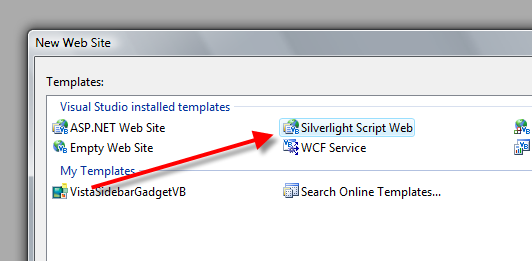
that's what you want. hope this helps.
i had previously written about creating custom expression encoder templates and integrating them into the encoder workflow (if you haven't read that, check it out, very simple process). my process was simple and followed the "CASE" methodology*.
Copy
Always
Steal
Everything
basically i would encode a video file to get the output of the encoder template, then blast away all the xaml in player.xaml, and create your own silverlight media player skin. really the only thing you need to know is the 'well known names' for certain controls (the most common of which i outline in my blog post. i've received comments and questions about how to get more into the code and curiosities of what else could be done and what is going on under the hoods to the bindings of the well known names. all this magic happens in baseplayer.js -- a file included in the encoder templates.
problem is that baseplayer.js is a crunched/optimized javascript file and really not human readable in a short time at least.
now the expression encoder team has went one step further. they've released a 22-page document outlining the process for creating a custom template that is bit more 'official' than my simple steps, but essentially encompasses the ideas. what is great is this document includes all the well known names that you might want to implement as well as descriptions on how to override default behaviors as well -- i've included a direct link to the document at the end of this post. one of the most valuable things i like in the document is a visual layout of a player and the well known names mapped so you can see them:

in addition to that, the team has provided a debug version of baseplayer.js as a supplement to expression encoder (the debug version comes with a EULA so be sure to read it -- only licensed users of expression encoder may use this debug version. this means it is human readable :-). this should help you understand the bindings more and determine what (if anything) else you would want to do.
so take a look at my previous post if you haven't, then download the docs and debug version if you have expression encoder to start building your templates today!
File: Developing Silverlight Media Player Skins
File: BasePlayer.js debug version
just saw in my feed reader...a cheat sheet by keith rull for LINQ. keith purports that this isn't a definitive list by any means but says:
"It consist of a few snippets that you might commonly do when doing LINQ processing."
he uses this for his most common tasks. when i first start learning anything new, i do the same thing keeping snippets around to help me remember certain things. as an example, can't remember how to do the paging? use keith's cheat:
//take three records
var takeThree = listOfPerson.Take(3);

//go to the 10th record and then take 3 records from there
var skipTenTakeThree = listOfPerson.Skip(10).Take(3);
thanks for posting keith and look forward to your updates!